

If you’ve been researching lip filler, you’ve almost certainly typed some version of this question into Google. Half a mil or a full mil? What’s the difference? What’s “normal” for a first time? It’s one of the most common things people arrive at their consultation already worrying about.
So let me answer it honestly, and then tell you why I think it’s slightly the wrong question.
Quick answer
There’s no universal “right” amount of lip filler. 0.5ml is a smaller, subtler adjustment; 1ml is more product and therefore more change, but the number that suits you depends entirely on your existing lip shape, your facial proportions, what you’re trying to achieve, and how your particular lips respond. At Ametrine we don’t sell lips by the millilitre or push a fixed “1ml treatment.” We look at your face as a whole, listen to what you actually want, and use the right amount and technique to get you there. Sometimes that’s less than you’d expect, and sometimes the answer isn’t only in the lip itself.
Why the ml question is so popular — and so limiting
I understand completely why people fixate on volume. It’s the one number that gets quoted everywhere. Clinics advertise “1ml lip filler £X”; social media is full of “I got 1ml” captions, so it becomes the unit everyone measures lips in. It feels concrete and comparable.
The trouble is that a millilitre is a measure of product, not a measure of result. Two people can have exactly 1ml and look completely different, because their starting lips were different, their proportions were different, and the way it was placed was different. Asking “should I get 0.5 or 1ml?” is a bit like asking a hairdresser “should I have four inches cut off?” before they’ve looked at your hair. The number only means something once someone has actually assessed what they’re working with.
That’s why when someone asks me for “1ml please,” my first response is usually a question back: “What do you want your lips to do?”
What actually determines how much lip filler you need
A few things matter far more than a round number on a price list.
Your starting point. Naturally fuller lips often need very little to balance or refine. Thinner or asymmetric lips might need a bit more to achieve the same visible change — or, just as often, need it placed differently rather than in greater quantity.
What you’re trying to achieve. “A bit more definition and hydration” is a very different brief from “I want noticeably fuller lips.” The first might be beautifully served by half a millilitre, or even less. Being honest with yourself about the goal is more useful than picking a volume.
Balance with the rest of your face. This is the big one, and it’s where we differ from many places. Your lips aren’t a standalone feature — they sit in proportion to your chin, your nose, your smile, the lower third of your face. The aim is lips that suit your face, not lips that hit a millilitre target. Occasionally that means recommending less than someone came in asking for.
How your lips respond. Lips behave differently from person to person; some hold product beautifully, some swell more, some integrate faster. Part of good practice is starting conservatively and building, rather than overcommitting on day one.
The part most people don’t know: it’s not always about the lip
Here’s something that regularly surprises our patients.
If your goal is volumised, supported, more youthful-looking lips, the answer isn’t always to put more filler into the lip body. The tissues around the mouth matter enormously. Small amounts of filler placed to support the corners of the mouth or to address the area around the lips can lift and frame them in a way that looks far more natural and often more flattering than simply adding volume to the lips themselves.
This is why we assess the entire lower face rather than focusing only on the lips. Sometimes the best result for the lips doesn’t come from the lips at all. You can’t get to that answer from a “0.5 or 1ml?” menu; it only comes from a proper look at your face.
How we do it at Ametrine
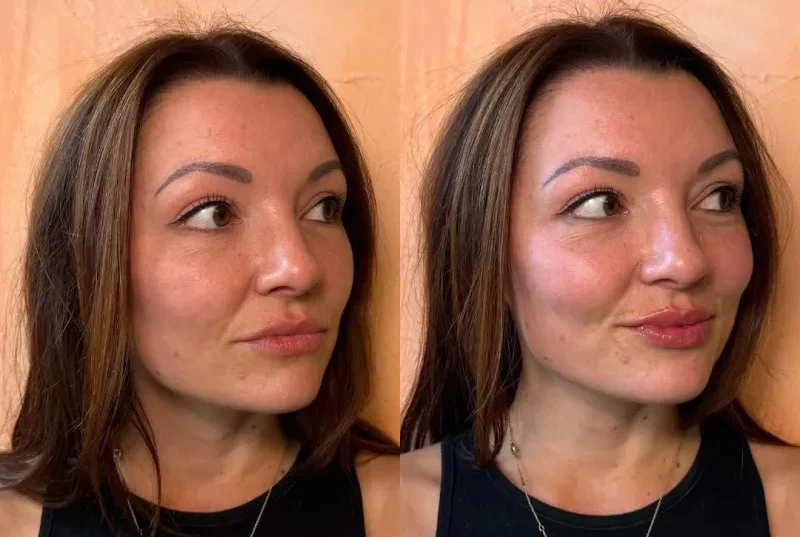
We don’t offer a “1ml lip package” or a “2ml lip package.” We charge for the filler you need, after first listening to what you want to achieve and assessing what would genuinely suit you and your face. Then we use the amount and the technique that gets you there.
For some people, that’s a conservative amount to refine and hydrate. For others it’s more. For others still, the real answer involves supporting the surrounding tissue rather than adding volume to the lip. The point is that it’s decided with you, for your face, not handed to you off a price list before anyone’s looked at you.
And if, during your consultation, we think there’s a better route to what you want — a lip flip with toxin, say, rather than filler—we’ll tell you that too. That’s the whole point of a proper assessment.
The Ametrine view
The “how much do I need?” worry usually comes from a good place; people want to look like themselves, just a little better, and they’re frightened of being overfilled. The way to protect against that isn’t to pick the smaller number and hope. It’s to go somewhere that treats your lips as part of your face and tells you the truth about what will actually suit you.
If you’re weighing up lip filler and don’t know where to land on amount, that’s exactly what a consultation is for. Come in, tell us what you want, and let us assess it properly. You might need less than you think.
Book a consultation at Ametrine Newcastle or take our free online assessment — and let’s find what actually suits you.
FAQs
Neither is automatically better — it depends on your natural lips and your goal. Many first-timers do beautifully on 0.5ml because it’s a subtle, natural change you can build on. But the right amount is something to decide at a consultation once we’ve assessed your lips, not something to pick in advance.
Yes: for many people, 0.5ml gives a lovely, natural improvement in shape, definition, and hydration without looking “done.” On naturally fuller lips, it can be plenty. It’s often underestimated.
2ml packages. We assess first, then use the right amount and technique for you.
Yes, and it’s an underused approach. Placing small amounts in the surrounding tissues — such as the corners of the mouth — can lift and support the lips and frame them naturally, sometimes yielding better results than adding volume to the lip body itself.
That’s completely normal and absolutely fine. Book a consultation — we’ll talk through what you want, assess your lips and face, and recommend the right amount and technique for you. You don’t need to arrive with a number in mind.
Yes. Starting conservatively and building over time is often the wisest approach — it’s much easier to add than to overfill and have to dissolve. We’d usually suggest letting any swelling settle for around two weeks before topping up.
