
There’s a conversation I have almost every week in the clinic. Someone books a course of microneedling or a Sculptra plan, they’re excited, they’ve thought about it carefully, and then I ask what they’re using at home, and there’s a pause.
It’s not a criticism. Most people assume the treatment is what matters and that skincare is the optional extra you buy on the way out. I’d like to turn that on its head gently.
The treatments we do in the clinic work by asking your skin to do something: to clear out damaged tissue, build new collagen, and repair itself. Whether your skin can actually deliver on that depends on the state it’s in when we start, and how well it’s supported while it heals. That’s the part skincare does. And it’s the reason we chose Alastin.
Alastin is a peri-procedural skincare range designed specifically for use around aesthetic treatments, not just alongside them. Its TriHex Technology™ (a blend of tripeptide-1 and hexapeptide-12) helps clear out old, damaged collagen and elastin from the extracellular matrix, creating room for new, healthy tissue to form. Used before and after treatments like microneedling and Sculptra, it can improve healing, reduce bruising and swelling, and help you get better results from the treatment you’ve already paid for.
Here’s the mental model I use with clients.
Imagine you want to build something new on a plot of land that’s already covered in rubble. You can pour concrete straight on top of it, and you’ll get something, but it won’t be as strong, as even, or as long-lasting as it would be if you’d cleared the site first.
Your skin’s extracellular matrix, the scaffolding that holds collagen and elastin, accumulates rubble as we age. Fragmented, degraded proteins that don’t do their job any more but still take up space. And crucially, that debris sends confusing signals to your fibroblasts, the cells responsible for making new collagen.
TriHex Technology works on this. Tripeptide-1 triggers the enzymes that clear damaged proteins out of the matrix. Hexapeptide-12 supports fibroblast function and elastin production. Clear the site, then build.
Alastin’s founding idea was that skin should be treated as a chronic wound, constantly under attack from internal and external stressors, constantly needing repair. Once you look at it that way, the logic of preparing the skin before treating it stops being a nice-to-have and becomes obvious.
I’m cautious about skincare claims. The industry is full of them, and most don’t survive contact with a decent study. Alastin is one of the few ranges where I can point you to actual peer-reviewed evidence, so let me do that.
On preparing skin before a procedure. A multi-centre study looked at patients undergoing blepharoplasty (eyelid surgery). They used Alastin’s Restorative Eye Complex on one side for 4 weeks beforehand and a bland moisturiser on the other side. side 85% had less swelling and bruising on the side that had been prepared with Alastin. More interestingly, when the removed eyelid skin was biopsied and examined by an independent pathologist, 13 out of 15 samples showed healthier extracellular matrix, with more plentiful collagen and elastin on the Alastin side. That’s not a satisfaction survey. That’s histology.
On recovery after injections. INhance was tested on induced bruises in a randomised, double-masked study. At day 2–3, participants using it had 73% less bruise colour intensity than those using a bland moisturiser, and 81% had less bruising overall. In the blepharoplasty study, 89% agreed it reduced their swelling, and 91% agreed that it reduced bruising.
On the eye area specifically. A 12-week study of the Restorative Eye Complex, used twice daily on its own, found a 41% improvement in lines and crow’s feet, 48% in under-eye bags, 39% in dark circles, and 29% in under-eye hollowing.
On facial volume. A 12-week multi-centre trial of Restorative Skin Complex included pre- and post-biopsies. The histology showed new adipocyte formation, new dermal collagen and elastin fibres, and increased epidermal hyaluronic acid from a topical serum—more on why that matters below.
On pigmentation. This is the one that made me sit up. A-Luminate was tested head-to-head against hydroquinone 4%, the prescription gold standard, in a multi-centre, randomised, masked trial. It outperformed it. More on that below, because it deserves its own section.
I’ll be straightforward with you: these are industry-funded studies, and some have small numbers. But they’re published, peer-reviewed, blinded, and include biopsy data, which is considerably more than most of the skincare in this space can offer. You can read the research yourself; we’re happy to point you to it.
We don’t stock the entire range. We stock the products that map onto the treatments we do, because that’s the whole point.
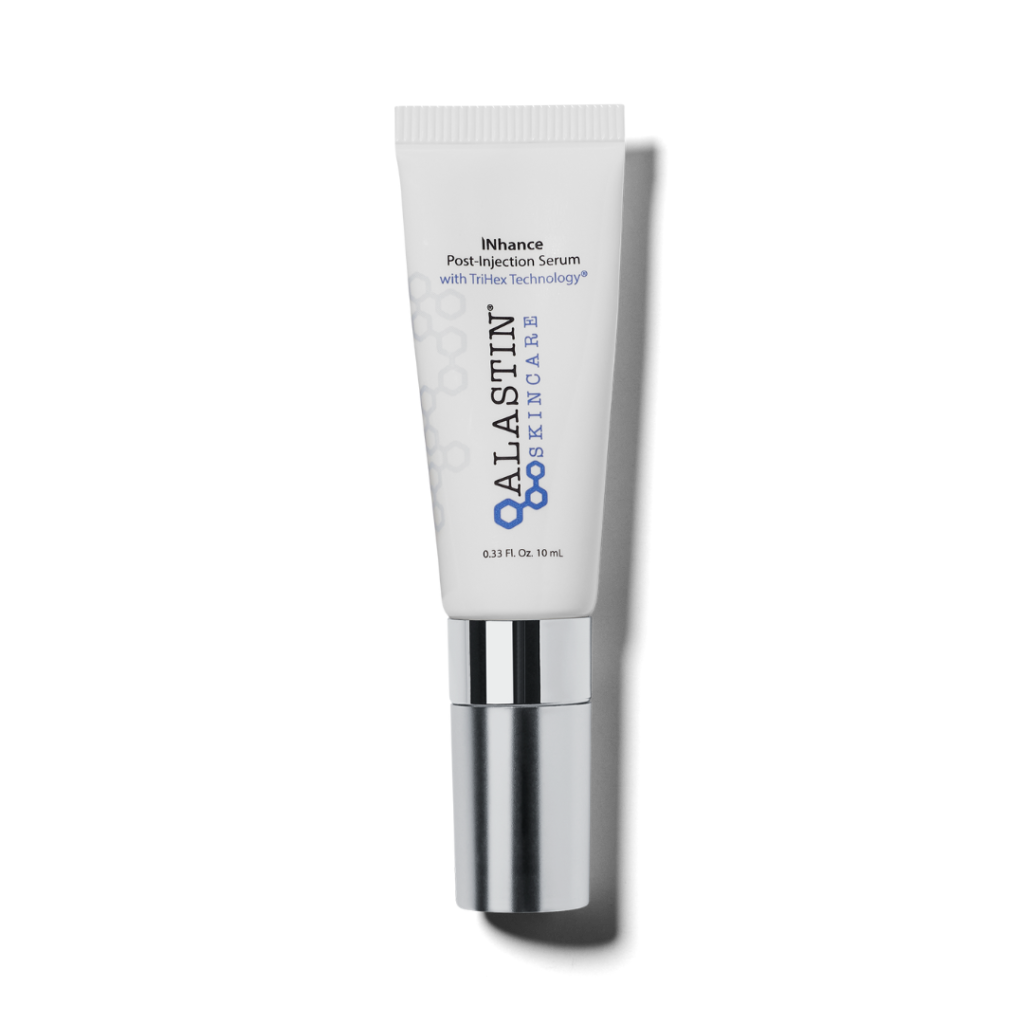
This is the one I reach for around anything involving a needle. Toxin, filler, polynucleotides, Sculptra. It’s specifically formulated to speed up how quickly your body clears a bruise; the actives improve how efficiently macrophages mop up the blood products that make a bruise look the way it does. Genuinely useful if you’ve got an event coming up, and reassuring if you’re someone who bruises easily. It has a cooling applicator tip, which people love more than they expect to.
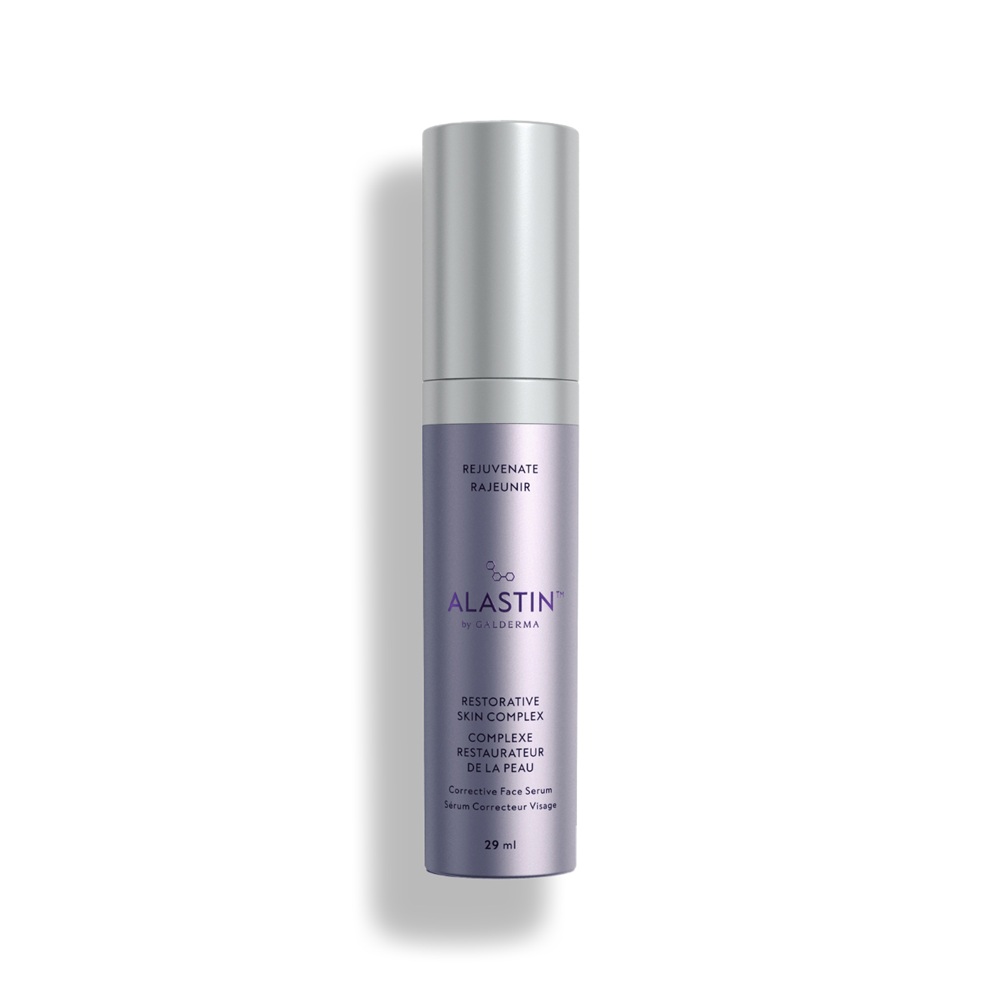
This is the one you use every day in between. And it’s the product I’d point to if you asked me what skincare can do that people don’t expect.
It’s the flagship TriHex serum, reformulated with Octapeptide-45 and magnolol. What makes it interesting is that it targets something most skincare products completely ignore: the fat layer.
We talk endlessly about collagen, but facial volume doesn’t come from collagen alone. It comes substantially from the fat pads beneath the skin, and the quality of those fat cells matters, not just how many there are. Here’s the bit of biology I find genuinely compelling: large, mature adipocytes are associated with less elastin and that deflated, sagging appearance. Small, young, newly formed adipocytes go hand in hand with better elastin. So, prompting your skin to generate fresh fat cells, rather than simply clinging on to tired old ones, is a real route to plumpness and firmness.
And this isn’t theoretical. In a 12-week multi-centre trial, 44 people, aged 35 to 69, across all Fitzpatrick skin types underwent biopsies. The histology showed increased stimulation of new adipocytes, alongside new dermal collagen and elastin fibres and increased hyaluronic acid in the epidermis. Not a satisfaction score. Actual tissue, under a microscope, is making new fat cells and new structural proteins.
They also ran a one-week run-in phase where participants used only the cleanser, moisturiser and sunscreen before the serum was introduced, which means the improvements can’t be shrugged off as “well, they started wearing SPF.” Every clinically assessed parameter improved significantly by week 12, supported by 3D photography for volume, instrumented hydration and elasticity readings, and investigator scoring.
The honest caveat, as ever: it was open-label, no placebo group, no blinding, and Alastin funded it. So it isn’t the same calibre of evidence as the A-Luminate head-to-head. But biopsy-confirmed adipocyte formation from a topical serum is a genuinely novel finding, and it’s the sort of thing I’d rather show you than tell you about.
To be clear about what it isn’t: this won’t replace a biostimulator. If you want real volume, Sculptra is doing something far more powerful. But as the thing quietly working in the background between your appointments, it’s excellent.
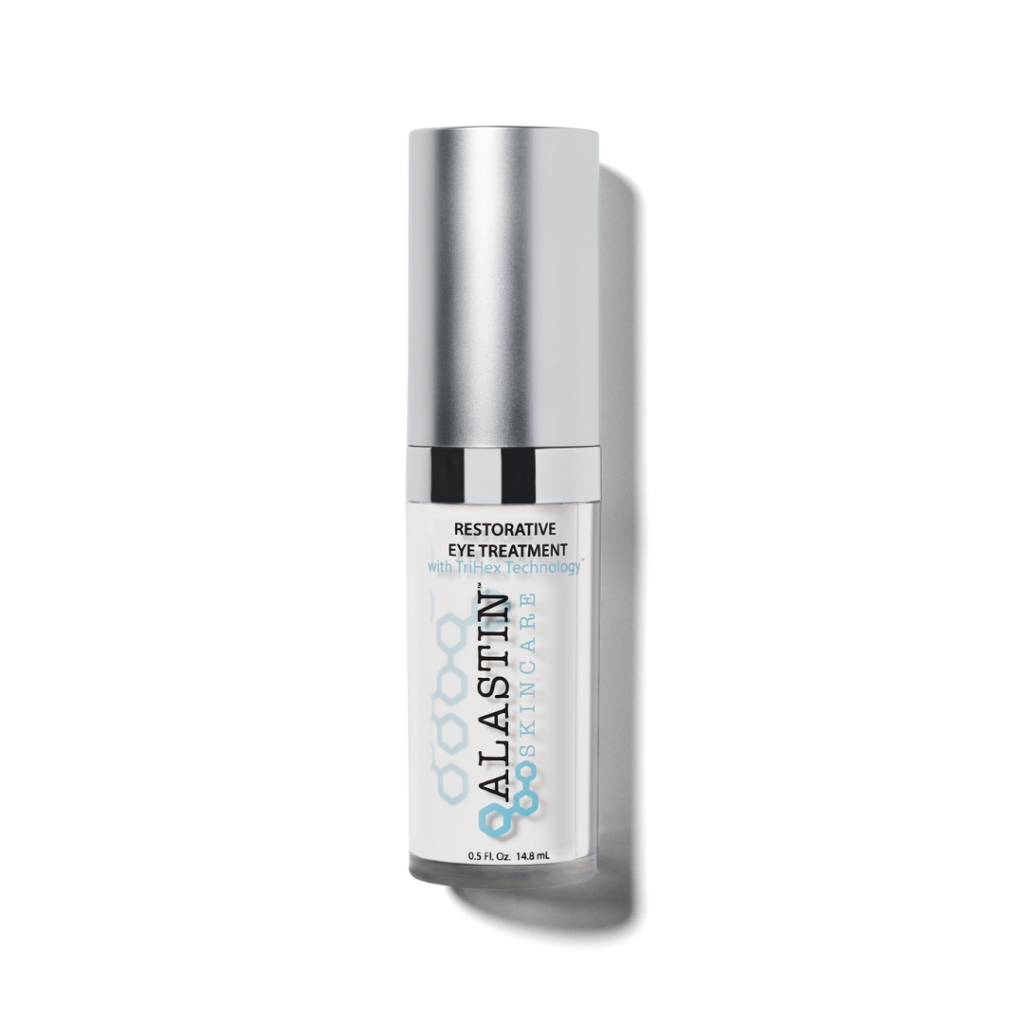
Peri-orbital skin is the thinnest on the face and one of the first places to show signs of ageing. This is TriHex applied to that specific problem, with niacinamide, green tea and mimosa extract for brightness and firmness. It sits beautifully alongside polynucleotide work under the eyes, and, as above, it has the study data to back it.
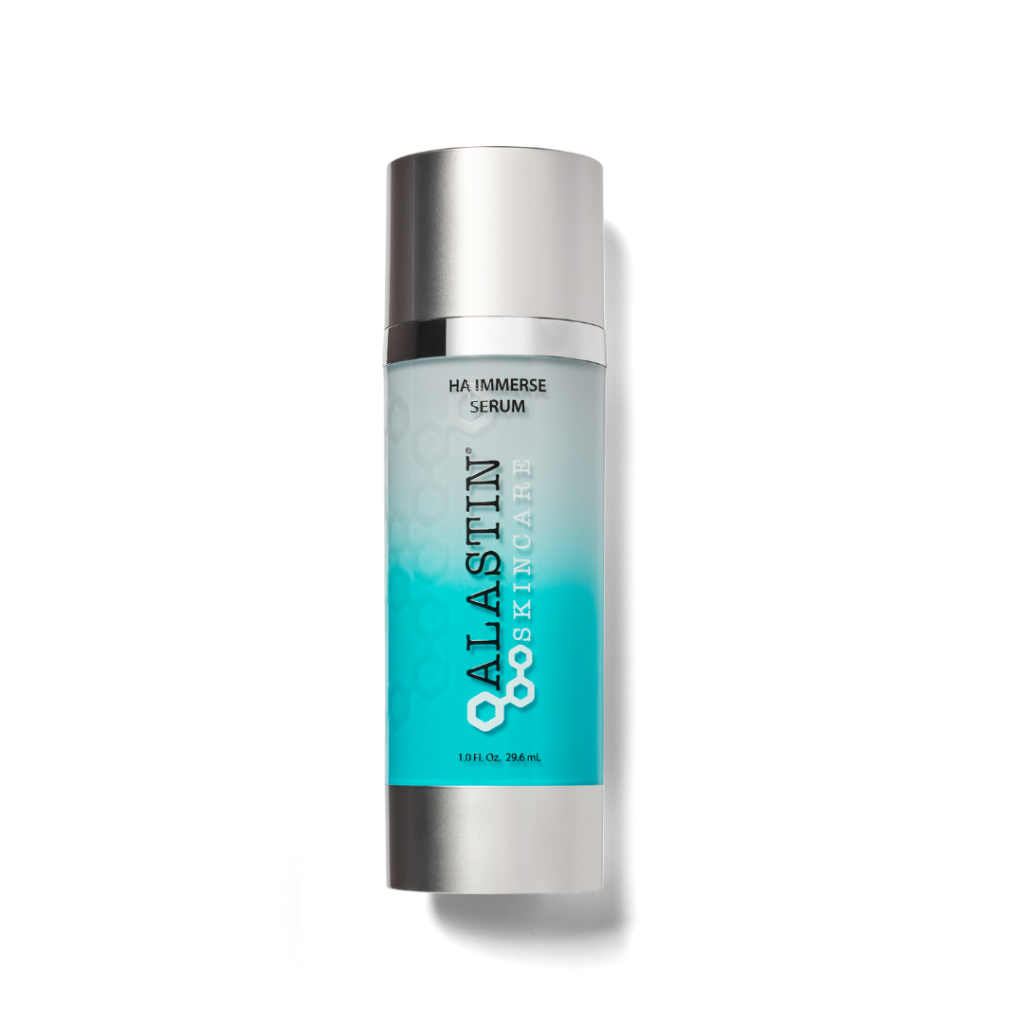
Our go-to for rosacea-prone and reactive skin, and a lovely thing to use around microneedling. Rather than just applying hyaluronic acid to the surface, it uses peptides that support your skin’s own HA production, plus cross-linked HA that holds significantly more water, providing instant cooling relief post-procedure and long-term barrier support.
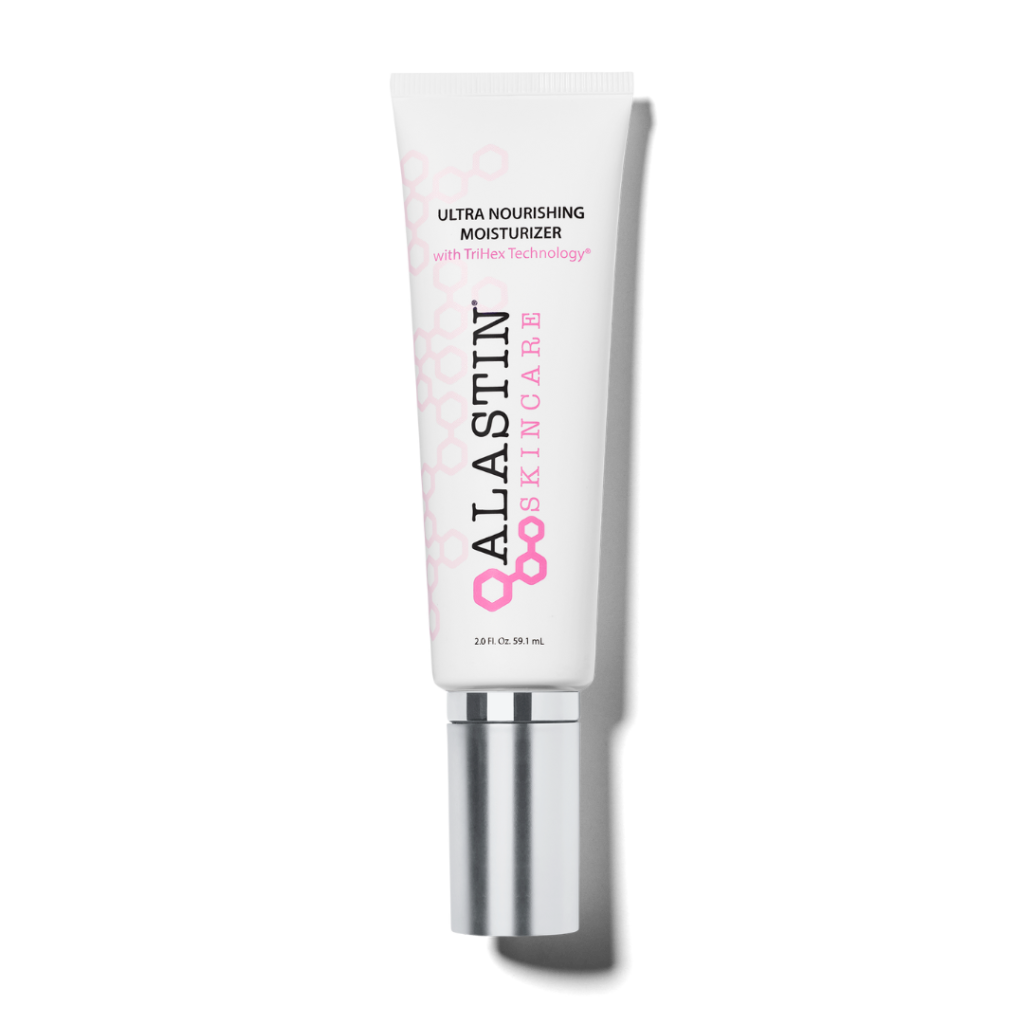
The workhorse. Linoleic acid, oat kernel and TriHex, formulated to fortify dehydrated skin and hold the barrier steady for 24 hours after a single application. If your skin barrier is compromised, nothing else you do will land properly. Start here.
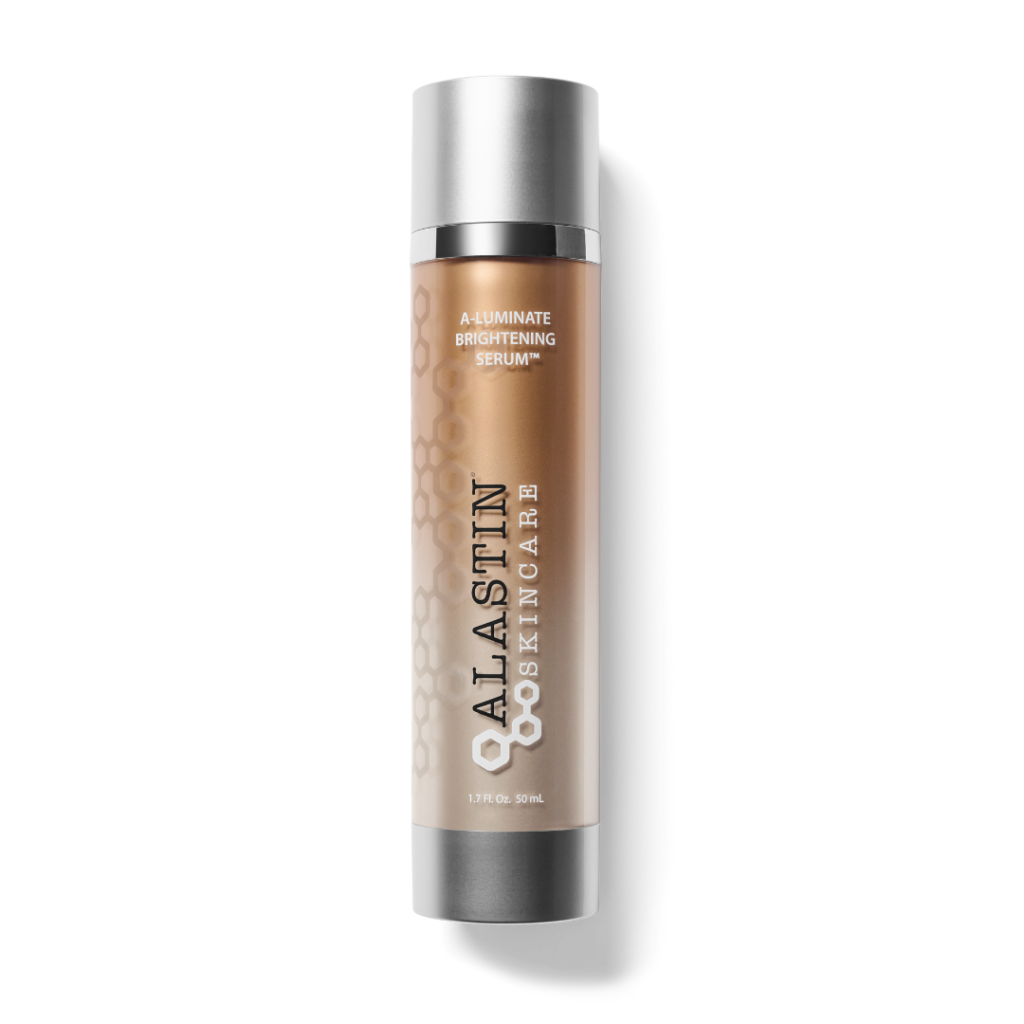
This is the one I get most animated about, so bear with me.
For decades, hydroquinone has been the reference point for pigmentation. It’s the prescription gold standard, and it comes with real strings attached. It’s irritating for a lot of people. It carries a risk of exogenous ochronosis, a darkening of the skin that is notoriously difficult to reverse. You have to cycle off it. And it’s been banned in the EU, Japan and Australia, and pulled from over-the-counter sale in the US, over concerns about its safety profile.
A-Luminate is hydroquinone-free and retinol-free. It uses liposomal tranexamic acid and niacinamide alongside Alastin’s PATH-3 Technology, which targets multiple points in the pigmentation pathway simultaneously rather than attacking a single step.
Now the part that matters. It’s been tested directly against hydroquinone 4% in a multi-centre, randomised, masked trial: 43 patients, twice daily for 12 weeks; both groups were given identical cleanser, sunscreen, and moisturiser; and outcomes were assessed by blinded investigators using the modified Melasma Area Severity Index.
At 12 weeks, the A-Luminate group showed significant improvements in pigmentation across both cheeks and the entire face. The hydroquinone group showed no significant improvement in any of those areas. A-Luminate also delivered significant gains in skin radiance and texture that hydroquinone didn’t. And on tolerability, it wasn’t close: the hydroquinone group had five adverse events and reported burning, stinging, itching, redness and dryness far more often. The A-Luminate group had none.
Then they ran a 24-week extension, which I think is the more interesting half. Patients who remained on A-Luminate continued to improve between weeks 12 and 24. Patients who came off hydroquinone, as you’re supposed to, significantly regressed. That’s the rebound problem, measured.
So this is a rare thing in skincare: a product that has gone head-to-head with the prescription gold standard, in a masked trial, and come out ahead on both efficacy and tolerability.
The usual caveats apply, and I’ll say them out loud: 43 patients is a modest number, and Alastin funded the work. But it’s a blinded, randomised multi-centre design against an active prescription comparator, which is a far higher bar than almost anything else in this category clears.
If pigmentation is your main concern, this is the conversation I want to have with you.
The honest summary: prep, then support.
If you’re having microneedling, we’d typically want you on HA Immerse and the Ultra Nourishing Moisturiser in the weeks before, with HA Immerse to hand for the days afterwards. Microneedling works by triggering your skin’s repair response, so the healthier and better prepared your skin is, the better the response you’ll get.
If you’re on a Sculptra plan, the logic is even stronger. Sculptra doesn’t fill anything; it asks your fibroblasts to make new collagen over the following months. Fibroblasts working in a cluttered, debris-filled matrix don’t perform as well as fibroblasts working in a clean one. Supporting that process at home, with TriHex clearing the matrix and a solid barrier underneath, means you’re giving a treatment the best possible conditions to succeed. In the days after each session, handle any bruising.
None of this is upselling. If you’d rather not, that’s genuinely fine, and your treatment will still work. But I’d be doing you a disservice if I didn’t tell you that the people who get the most out of their treatments are, almost without exception, the people who look after their skin in between them.
We’re selective about what we bring into the clinic. We don’t stock things because a rep was persuasive, and we don’t recommend products we haven’t used ourselves or seen work on our clients’ skin.
Alastin earned its place because it does something specific and evidence-based: it prepares your skin for what we’re about to ask of it and supports it through the healing that follows. That’s not a luxury layer on top of your treatment. It’s part of the treatment.
If you’re not sure where to start, book in and we’ll properly assess your skin, talk through what you’re actually using, and build something that fits: your skin, your treatments, your budget.
✨ Book a consultation at Ametrine Newcastle or take our free online assessment, and let’s get your skincare working as hard as your treatments do.
What is TriHex Technology?
It’s a patented blend of two peptides: tripeptide-1 and hexapeptide-12. Together, they help clear away old, damaged collagen and elastin from the skin’s extracellular matrix and support the production of fresh, healthy replacements. It’s the active technology behind most of the Alastin range.
Is Alastin worth it?
If you’re having in-clinic treatments, yes, that’s exactly what it’s designed for. It’s peri-procedural skincare, meaning it’s formulated to be used before and after procedures to improve healing and enhance results. If you’re not having treatments, it’s still a good medical-grade range, but you’re not using it for its main strength.
When should I start using Alastin before a treatment?
Around two weeks of preparation is when the matrix-clearing activity really gets going, and published studies typically use a four-week pre-treatment window. We’ll give you a specific plan at your consultation, depending on what you’re having done.
Can Alastin help with bruising after filler or Sculptra?
That’s what INhance is for. In a randomised study, it reduced bruise colour intensity by 73% at day 2–3 compared with a bland moisturiser. We recommend it around any injectable treatment.
Can I use Alastin straight after microneedling?
Yes, Skin Nectar and HA Immerse are both designed for immediate post-procedure use. HA Immerse, in particular, provides instant cooling relief. We’ll talk you through exactly when to apply what as part of your aftercare.
Is Alastin suitable for sensitive or rosacea-prone skin?
HA Immerse is our usual recommendation for reactive and rosacea-prone skin; it hydrates and calms without the irritation some actives cause. As always, we’d assess your skin first rather than guess.
Is A-Luminate better than hydroquinone for pigmentation?
In a multi-centre, randomised, blinded trial comparing the two directly over 12 weeks, A-Luminate produced significant improvements in pigmentation across the cheeks and total facial area. In contrast, hydroquinone 4% produced no significant improvement in those areas. A-Luminate also caused no adverse events, whereas the hydroquinone group reported burning, stinging, itching and dryness. In a 24-week extension, patients who remained on A-Luminate continued to improve, while those who stopped hydroquinone regressed. It’s a small study (43 patients) and industry-funded, but it’s a blinded head-to-head against the prescription gold standard, which is unusual and worth taking seriously.
Is A-Luminate safe for long-term use?
Yes, and that’s a meaningful advantage. Hydroquinone must be cycled off due to the risk of exogenous ochronosis. A-Luminate is hydroquinone-free and retinol-free, non-irritating, and designed for continuous daily use. With pigmentation, staying consistent over months is a large part of achieving the result.
Can skincare really affect facial volume?
To a degree, yes, and this is newer science worth understanding properly. Facial volume comes substantially from the fat pads beneath the skin, and the quality of those fat cells matters: smaller, newly-formed adipocytes are associated with healthier elastin, while large, mature ones are linked with sagging. In a 12-week trial of Alastin’s Restorative Skin Complex, biopsies showed histological evidence of new adipocyte formation, as well as new collagen and elastin fibres. The caveat is that the study was open-label rather than blinded, so it’s not the strongest possible evidence, but it is biopsy-confirmed rather than survey-based. It won’t replace a biostimulator like Sculptra if you want meaningful volume, but it’s a sensible thing to have working in the background.
