

Most people think of skin ageing as something that happens on the surface: lines, wrinkles, the odd age spot. At Ametrine Newcastle, we take a deeper view, because to understand how skin ages you have to look past the surface to the bone, fat, muscle and collagen beneath it. The face changes from the inside out, and the lines you see are often the last layer of a much bigger story.
This guide explains the real science of facial ageing, layer by layer, and maps each change to the kind of treatment that addresses it. The aim is understanding, not alarm.
How Does Skin Age, Layer by Layer?
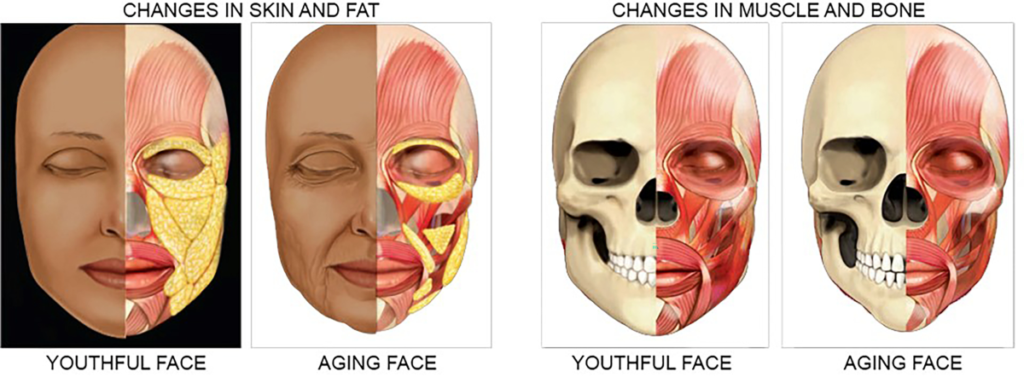
Hudson, C., Brissett, A. & Carniol, P. Analysis and Assessment of Facial Aging. Curr Otorhinolaryngol Rep 9, 415–421 (2021). https://doi.org/10.1007/s40136-021-00369-z1
A useful way to picture facial ageing is as five layers, each changing on its own timeline. Surface changes are simply the most visible part of the process.
- Bone: The facial skeleton slowly resorbs with age. The eye sockets widen, the jaw and chin lose projection, and the cheekbones flatten, so the soft tissue above has less to sit on.
- Fat: The face is organised into fat pads. With time, these shrink and slide downwards, creating hollows above and heaviness below.
- Muscle: Years of repeated expression deepen certain lines, while changes in muscle tone alter the resting shape of the face.
- Collagen: Collagen keeps skin firm and elastic. Research suggests we lose roughly one per cent of our collagen each year from our early twenties, with a steeper decline around menopause.
- Surface: The skin itself, where sun damage, dehydration and slower cell turnover show up as texture, pigmentation and fine lines.
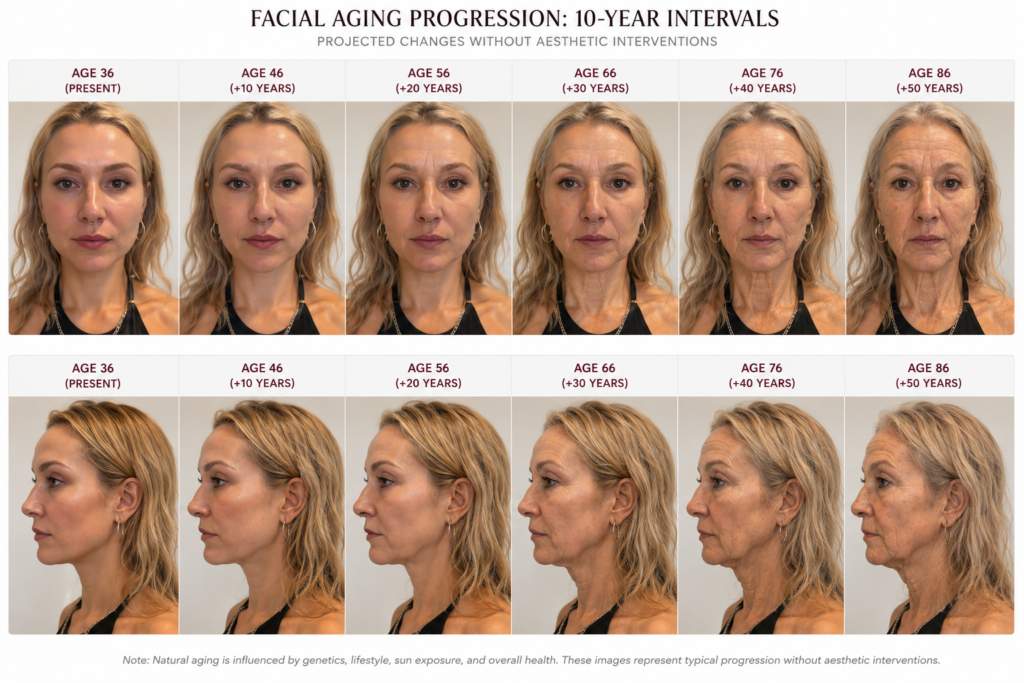
Intrinsic Ageing Versus Sun Damage
It helps to separate two forces. Intrinsic ageing is the genetic, time-driven process that happens to everyone. Extrinsic ageing is the damage added on top by external factors, above all ultraviolet exposure, which accelerates collagen breakdown and pigmentation. The encouraging part is that the extrinsic share is largely within your control, and a great deal of what people read as “old skin” is actually accumulated sun damage rather than time alone.
Matching Treatments to the Layer
Effective treatment works out which layer is driving the change and addresses that, rather than only chasing surface lines. Here is how we think about it at Ametrine Aesthetics Newcastle.
| Layer | What helps |
| Lost structure (bone and deep volume) | Collagen-stimulating Sculptra and Radiesse, and structural dermal filler from the Restylane range. |
| Collagen decline | Regenerative treatments such as SkinPen microneedling, polynucleotides (Plinest) and Profhilo. |
| Surface quality | Chemical peels, medical-grade PCA Skin skincare and, above all, daily SPF. |
Our team assesses ageing as a whole pattern rather than a list of separate complaints, which is why a plan built around your particular layers tends to outperform treating one line at a time. If you are weighing up where to start, our guide on skin boosters versus dermal fillers is a useful next read.
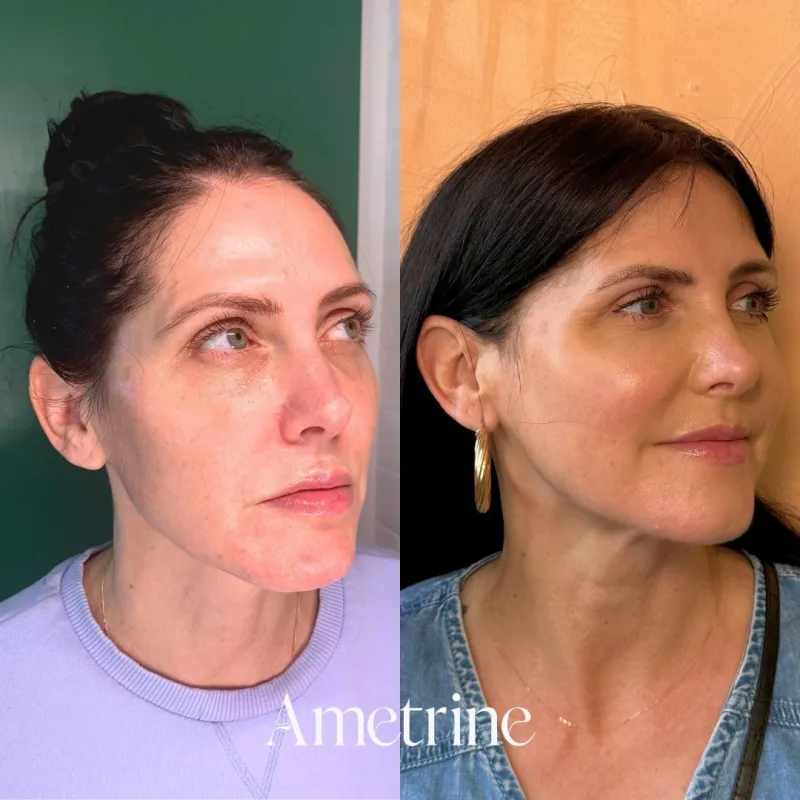
Before & After Results
Real results speak louder than theory. Here is an example of the kind of change a targeted, layer-based approach can achieve.
Can You Slow Skin Ageing?
You cannot stop the intrinsic process, but you can meaningfully slow the visible side of it. Protecting against ultraviolet damage with daily SPF, supporting collagen through regenerative treatment, and maintaining good skin health all influence how quickly change shows. The goal is not to chase an impossible standard, but to age in a way that still looks like you.
Book a Skin Consultation at Ametrine Aesthetics Newcastle
Understanding which layer is changing is what turns a scattergun approach into a sensible plan. At your consultation, our experienced clinical team will map your own ageing pattern and build a treatment plan around it. You can also start with our free online assessment.
Book your treatment | Free online assessment
Frequently Asked Questions
What causes skin to age?
A combination of internal change (bone resorption, shrinking fat pads, muscle change and collagen loss) and external damage, chiefly ultraviolet exposure. Surface lines are usually the last layer of a deeper process.
At what age does collagen start to decline?
Collagen production begins to decline from the early twenties, with research suggesting a loss of around one per cent per year, and a steeper drop around menopause.
Why does the face lose volume with age?
The facial bones slowly resorb, and the fat pads shrink and descend, so soft tissue drops, creating hollows higher up and heaviness lower down.
What is the difference between intrinsic and UV ageing?
Intrinsic ageing is the genetic, time-driven process everyone experiences. UV ageing is added, largely preventable damage from sun exposure.
Can you slow down skin ageing?
You cannot stop intrinsic ageing, but daily SPF, regenerative treatments that support collagen, and good skin health can noticeably slow the visible changes.
- Hudson, C., Brissett, A. & Carniol, P. Analysis and Assessment of Facial Aging. Curr Otorhinolaryngol Rep 9, 415–421 (2021). https://doi.org/10.1007/s40136-021-00369-z ↩︎
